
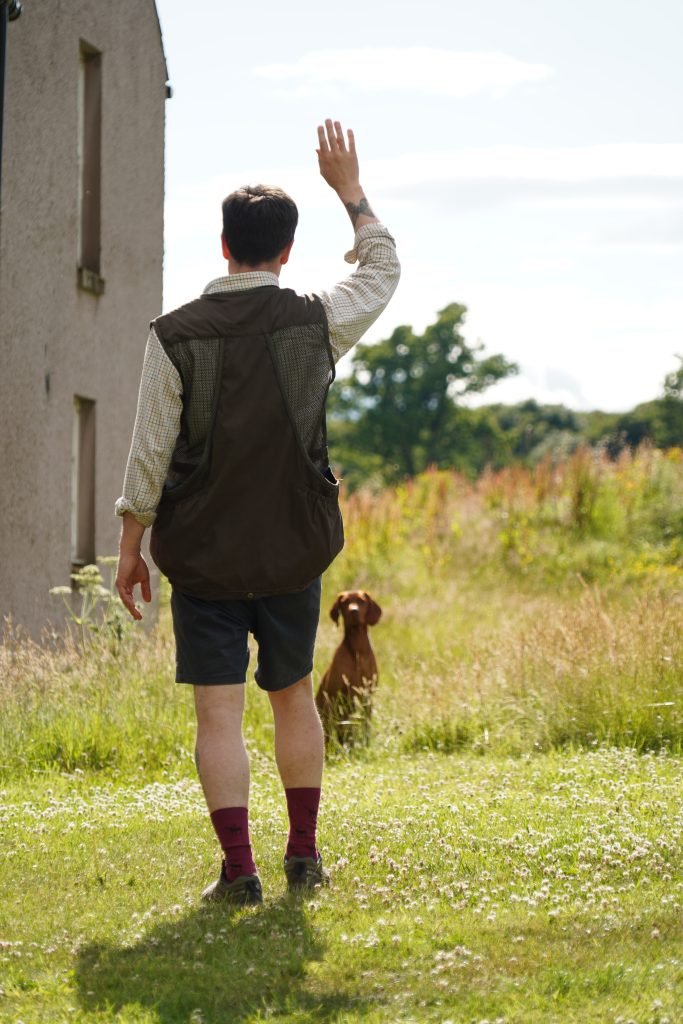
Training a stop whistle is one of the cornerstones of gundog control. Whether you’re preparing for trials, working on live game, or simply wanting a well‑mannered companion, a reliable stop command gives you calm, controlled handling in every setting. This guide takes you from your kitchen to the open field in just five short sessions.
Who this helps
- Young gundogs (6 months+)
- Breeds with strong hunting drive (vizslas, labradors, spaniels)
- Owners who want safe, predictable control before entering woodland, moorland, or farmland
Equipment
- A whistle (210.5 or 211.5 ACME)
- Lead or long line
- Small food treats or kibble
- A quiet indoor space (session 1–2)
- Enclosed garden or paddock (session 3)
- Local woodland or moorland (sessions 4–5)
Tip: always keep sessions under 10 minutes to avoid frustration.
The 5‑Session Plan
Session 1: Introduce Indoors
- Stand with your dog on lead.
- Blow one short, sharp whistle.
- Step in front and reward the sit immediately.
- Repeat 5–6 times. Keep it light.
Session 2: Build Association
- Repeat in different rooms.
- Add a gentle hand signal (palm facing dog).
- Reward instantly every time.
Session 3: Garden Transition
- Move outdoors on a long line.
- Allow distraction (mild scents, noises).
- Whistle once, step in, reward when bum hits ground.
- Keep sessions upbeat.
Session 4: Controlled Fieldwork
- Move to quiet woodland edge.
- Dog on long line, allow exploration.
- Whistle, hand up, pause one second, step in if needed.
- Reinforce heavily with praise/treat.
Session 5: Moorland Proofing
- Open ground, longer distance.
- Dog off lead only if safe.
- Whistle when dog is moving away.
- Reinforce quickly — walk up and reward.
- Keep the first attempts easy for success.
Common Mistakes
- Overusing the whistle: only blow once, avoid nagging.
- Slow rewards: be at the dog quickly so the link stays strong.
- Too many distractions too soon: build gradually.
- Frustration: if the dog fails twice, step back a level.
Training in Real Locations (Scotland)
Scotland’s open landscapes are both a gift and a challenge. Moorland winds can carry scents and sounds further than you expect. Woodland cover can break line of sight quickly. Always practise stop whistle first in enclosed, safe spots before heading to the hill. And remember the Scottish Outdoor Access Code: respect wildlife, keep control around livestock, and be considerate to other users.
Progress Checks
- Indoors: sits within 1 second of whistle.
- Garden: succeeds 4 out of 5 attempts with mild distractions.
- Field: responds first time at 10+ metres.
- Moor: sits first time at distance with wind and scent distractions.
When all three stages are reliable, you have a field‑ready stop whistle.